Polyunsaturated fats are a second type of food-fat that we can still list in "The Good" category.
Especially when used in place of saturated fat, polyunsaturated fats can help lower LDL or "bad" cholesterol.
These fats include vegetable oils such as safflower,sunflower, soybean and corn oil; however, when choosing an oil, I really like the benefits of the MUFA oils we looked at yesterday. Walnuts are also a rich source of polyunsaturaed fat.
But a special polyunsaturated fat that has special interest for us -- not just in terms of weight management, but for our overall health -- is the Omega-3 fatty acid. Omega-3's have a good effect on our cholesterol, blood pressure, and can reduce inflammation throughout the body, according to the American Heart Association.
Here's what the medical staff at the Mayo Clinic has to say about the omega-3 fatty acids:
"Doctors recommend eating at least two servings of fish a week. The highest levels of omega-3 fatty acids are in:
■Mackerel
■Lake trout
■Herring
■Sardines
■Albacore tuna
■Salmon
■Halibut
You should bake or grill the fish to avoid adding unhealthy fats. If you don't like fish, you can also get small amounts of omega-3 fatty acids from foods like ground flaxseed or canola oil.
You can take an omega-3 or fish oil supplement to get some of the benefits, but you won't get other nutrients in fish, like selenium. If you decide to take a supplement, just remember to watch your diet and eat lean meat or vegetables in place of fish. "
And here's a link to a healthy salmon recipe that weighs in below our 400 calorie dinner allowance:
http://www.mayoclinic.com/health/healthy-recipes/NU00431
Bon appetit!
Wednesday, June 30, 2010


Monday, June 28, 2010
Fats: The Good! The Bad! And the Ugly!
First: the GOOD!
Good fats have an acronym that's easy to remember: MUFA (just say "mooooo-fah"!)
A MUFA is a monounsaturated-fatty-acid. See why I like to say MUFA instead?
If you have ever tried to lose weight before by changing your diet plan, or if you have ever been told to change the foods you eat in order to lower your cholesterol, you have probably learned about low-fat food choices, and you may also know there are three kinds of fats found in our foods.
Here's an easy way to remember which is which: the more saturated a fat is the more solid it will be at room temperature (think the white fat on beef or poultry skin or butter to visualize what saturated fat looks like). Saturated fat is linked to clogging our arteries and rasing the level of cholesterol in our blood, and we'll talk more about saturated fat in a couple when we get to "The Bad".
When we talk about good fats, MUFAs are first on the list!
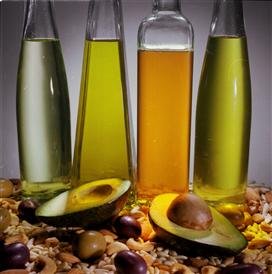
MUFA's are fats in foods that can have good effect on our health by actually helping to lower the bad cholesterol levels, reducing our risk of heart disease. MUFAs are also of benefit because - like other fats, they are filling and add flavor to our food. Fats help us feel satisfied when we eat -- that's one reason we have a love affair with fatty foods!
Foods high in MUFA's include olives, avocados, most nuts and seeds, olive oil, canola oil and peanut oil. When you are cooking, choose these oils to add when you absolutely, positively have to have a cooking fat. A classic salad dressing is oil and vinegar....I like to drizzle a little olive oil directly on my salad, follow up with a squirt of a flavored vinegar ( cider, red wine, or balsamic) and toss -- saves a lot of calories -- and gives me that cholesterol protection I need. Chop up avocado for your salads, add pesto sauce to a 1/2 cup of pasta, have 1/4 cup of nuts as your afternoon snack - these are all ways to ge this healthy fat in your diet plan.
Prevention.com has an eating plan Called the "Flat-Belly Diet" that is recommends a MUFA at every meal. How can you get a MUFA at breakfast? Chop some walnuts or almonds and add to your cereal or oatmeal.
Some of us may say this is the best MUFA of all:

Yes, you are seeing right: chocolate! Dark chocolate has healthy monunsaturated fatty acid in it!
To get the healthiest benefits, go for small amounts of the darkest chocolate ( high cocoa content). This way you don't have to cut out a dessert when you are losing weight.
Many people decide to lose weight by swearing off fats, or choosing fat-free everything. Two problems arise: first, it's hard to sustain a completely fat-free eating plan forever. It can be done - Dean Ornish heart patients, for example, often regain better health by eliminating virtually all fat form their diets. But most of us are unwilling to give up fat forever; and most of us can lose pounds and increase heart health by modifying the type - and amount- of fat we consume. The second problem with many fat-free food products is that often food processors add extra sugar and other additives to make up for the difference in the way fat-free foods taste, so while we are getting less fat, we may be getting more calories.
When you change your eating habits to include a MUFA at every or most meals, you do your heart a favor and you still get that "fat-isfaction", but to make sure your waistline also benefits, bear in mind that like all fats, MUFAs have 9 calories per gram as opposed to the 4 calories per gram that you find in proteins and carbohydrates.Go for small amounts, but get big benefits!
So what's on your plate? Got MUFA?
Friday, June 25, 2010
Packing Your Tool Box
Once you become aware that you are sometimes eating for no real reason...it's there, and so are you....you may feel that you need more help than the Hunger Scale alone. The Hunger Scale increases our awareness of mindlesss eating, but do you have to rely on willpower alone?
There are behavior change tools you can use instead of the teeth-gritting reliance on will-power that often makes us feel less than happy.
The four "D"s are recommended by the American Cancer Society for smokers who are trying to quit in the ACS Fresh Start program, and they can work for you when you are trying to quit auto-pilot eating.
Delay.
Just telling yourself you are going to wait --- even for 10 minutes-- before you have a snack, can give you time to re-group by using another of the four "D"s.
Do something else.
Plan in advance an activity that you will do instead of eating. It might be going for a walk, knitting, playing piano ( breaking that hand-to-mouth cycle) or even brushing your teeth.
Deep breathe.
A fantastic break from routine that relaxes you and really helps avoid eating from stress!
And finally, one of our magic bullets:
Drink water.
Believe it or not, we often eat wen we are actually really thirsty. Water is also cleansing of course, and filling!
So there you have it: four new tools to use as you revise your eating plan to Lighen Up.
On Monday, we'll start looking at the facts on fats -- or as I like to call it "The Good, the Bad, and the Ugly!" Stay tuned!
Thursday, June 24, 2010
Are You on Auto-Pilot?
Gaining weight usually can be traced to a very simple cause: eating too much.
Sometimes we know we are over-eating....just think Thanksgiving Dinner!!!!
But often we go through the day grabbing a bite here and there, munching mindlessly while we sort the mail or watch tv, helping ourselves to office breakroom goodies as we pass by, or extra dessert at a birthday party --- not becasue we are hungry ---but just because the food is there.
I used to have a habit of walking in the door after work and going straight to the refirigerator and opening it. Sometimes I was actually hungry, but most of the time I was just on auto-pilot...I just did it our of habit. And ususally there was something that became a snack I didn't really need.
Can you think of times when you are on auto-pilot, eating just because it's there or"it's time to eat," or "everyone else is eating", or "I don't want the leftovers to go to waste"?
These mindless calories add up fast! When you are trying to lighten up, you do want to eat when you are hungry. And you want to eat just enough to stop being hungry and fuel your body for energy until the next time you eat.
So here's a tool I came across several years ago in Real Simple magazine, to help you judge whether you are eating for the right reasons, or because you are on auto-pilot:
THE HUNGER SCALE
Eat when you feel like 1,2,3,& 4.
Stop eating at 5 or 6. If you are trying to lose, stop at 5, this allows your body to burn more calories than you intake.
Don't eat if you feel like 7,8,9,or 10.
10
Stuffed. So full you feel nauseous.
9
Very uncomfortable. You need to loosen clothing.
8
Uncomfortably full. Bloated.
7
Full. A little bit uncomfortable.
6
Perfectly comfortable. You feel satisfied.
5
Comfortable. More or less satisfied. Could eat a little more.
4
Slightly uncomfortable. You're just beginning to feel the signs of hunger.
3
Uncomfortably hungry. Stomach is rumbling.
2
Very Uncomfortable, irritable and unable to concentrate.
1
Weak and light-headed. Your stomach acid is churning.
Use the Hunger Scale to help you get in touch with real hunger, and then counting calories will become less important.
Wednesday, June 23, 2010
Is *Diet* a Four-Letter Word?
Well, technically and literally, of course it is!
In its purest form, your diet is what you regularly eat, whether you are watching your weight, trying to lose, or plain don't give a d***, Scarlett! I know that one is a four-letter word....is diet the same kind of word to you?
At work, we have a group of employees who offer each other support as they make their way thorugh the days and months of increasing activity and decreasing waist size! They are tremendous sources of inspiration and information. One of these folks shared a link to a great video - it's the wellness segment from a recent Today show. Fantastic information, so tune in and learn - and decide for yourself what the "D" word means to you!
Tuesday, June 22, 2010
Being the Change
Today, I spoke with a television news reporter about the latest release from the Gallop-Healthways Index which connects the influence of work, job stress, and economic worries to emotional and physical wellness :
http://www.well-beingindex.com/newsroom.asp#Press
This study is interesting in that it gives a daily snapshot of several wellness indicators – not just physical – of communities all around the country. Thousands of Americans are interviewed 350 days out of the year about their attitudes and beliefs about their personal well-being.
Once again, West Virginia is ranked last in the nation in terms of how well we are and feel about our lives on any given day.
Like many of the Southern and our neighboring states, West Virginia’s economic health influences our residents’ physical, mental, and emotional health on a daily basis. The low Life Evaluation score indicates that many West Virginians don’t expect to be better off economically in 5 years. They may perceive that they have little control over their work environment or job security and that leads to STRESS. Did you know that most conditions that end up in a visit to a doctor begin because of the way we handle or don’t handle the stress of life?
Last winter people came out in large numbers to get the H1N1 vaccine because they were afraid of getting the flu. What if folks were as motivated to make even small changes in their personal daily health habits? We should be just as worried about the effects chronic stress and poor lifestyle habits will have on our lives as we were of getting the flu.
Making an improvement in healthy habits is a great way - maybe the best way - to improve the quality of daily life, deal with stress and gain a sense of control over your future. And every year, I believe more people are making those changes! I look around and see more people planting gardens, providing healthy foods at our farmer’s markets, coaching youth athletics and organizing wholesome activities that are alternatives to aimless “partying.” I see more and more walkers! I see our many community agencies working tirelessly to provide safe, free or low-cost services of all kinds to our residents, including health fairs, parenting classes, Meals on Wheels, day care and counseling. Our state offers free hotlines and counseling for people who need help with the depressive addictions of tobacco, prescription drugs, and gambling.
So I remain optimistic about our community’s resilience and wellness, and you who are following the Lighten Up program are a major reason for my optimism. I am encouraged to know all of you who do want to improve your health- -right now we have 450 enrolled in Davis Health System’s free walking program and more than 200 following this free online weight-loss blog!
You may know the Ghandi quote, “Be the change you wish to see in the world.” When you participate in these programs, you are the healthy role models and “real time” wellness leaders of our communities. On the days you struggle to get out in the rain to walk – or choose to drink water instead of a Coke- or count those calories! - know that your healthy choices make a difference that can change our whole community.
So while we wait for the economic climate to improve, I applaud you for taking charge of your health to “change the things you can” and for being the forerunners for change who can influence others! Help encourage people to seek support and education from our social service agencies, senior centers, local health departments, doctors, Family Resource Networks, wellness-based centers, and faith communities when they need it. At our own Davis Health System we are striving to change he way we deliver medicine to be where you need us with the services you need closer to home- or even in the home. Our local college, Davis & Elkins College, has become invested in promoting community health by opening its indoor track free of charge for walking. Positive steps!
Every step you take – every step we as a community take - toward healthy lifestyle change – will help move West Virginia up the scale of the Well- Being Index! We'll be dealing more in the upcoming weeks with the problem of stress and weight, but for today, thank you for “being the change.”
http://www.well-beingindex.com/newsroom.asp#Press
This study is interesting in that it gives a daily snapshot of several wellness indicators – not just physical – of communities all around the country. Thousands of Americans are interviewed 350 days out of the year about their attitudes and beliefs about their personal well-being.
Once again, West Virginia is ranked last in the nation in terms of how well we are and feel about our lives on any given day.
Like many of the Southern and our neighboring states, West Virginia’s economic health influences our residents’ physical, mental, and emotional health on a daily basis. The low Life Evaluation score indicates that many West Virginians don’t expect to be better off economically in 5 years. They may perceive that they have little control over their work environment or job security and that leads to STRESS. Did you know that most conditions that end up in a visit to a doctor begin because of the way we handle or don’t handle the stress of life?
- Economic stress can lead to unhealthy ways to deal with stress like overeating or eating the wrong things or smoking, or misuse of drugs and alcohol.
- Those behaviors often lead to chronic health conditions like diabetes, hypertension, depression, or lung and heart disease –--- which leads to more stress and more economic worries.
- So it becomes a vicious cycle – and it’s a cycle we need to work on changing at every level – in our communities to create stable jobs and infrastructures that support healthy lifestyles --- and in our families to adopt and pass on healthier habits and provide emotional support to one another.
Last winter people came out in large numbers to get the H1N1 vaccine because they were afraid of getting the flu. What if folks were as motivated to make even small changes in their personal daily health habits? We should be just as worried about the effects chronic stress and poor lifestyle habits will have on our lives as we were of getting the flu.
Making an improvement in healthy habits is a great way - maybe the best way - to improve the quality of daily life, deal with stress and gain a sense of control over your future. And every year, I believe more people are making those changes! I look around and see more people planting gardens, providing healthy foods at our farmer’s markets, coaching youth athletics and organizing wholesome activities that are alternatives to aimless “partying.” I see more and more walkers! I see our many community agencies working tirelessly to provide safe, free or low-cost services of all kinds to our residents, including health fairs, parenting classes, Meals on Wheels, day care and counseling. Our state offers free hotlines and counseling for people who need help with the depressive addictions of tobacco, prescription drugs, and gambling.
So I remain optimistic about our community’s resilience and wellness, and you who are following the Lighten Up program are a major reason for my optimism. I am encouraged to know all of you who do want to improve your health- -right now we have 450 enrolled in Davis Health System’s free walking program and more than 200 following this free online weight-loss blog!
You may know the Ghandi quote, “Be the change you wish to see in the world.” When you participate in these programs, you are the healthy role models and “real time” wellness leaders of our communities. On the days you struggle to get out in the rain to walk – or choose to drink water instead of a Coke- or count those calories! - know that your healthy choices make a difference that can change our whole community.
So while we wait for the economic climate to improve, I applaud you for taking charge of your health to “change the things you can” and for being the forerunners for change who can influence others! Help encourage people to seek support and education from our social service agencies, senior centers, local health departments, doctors, Family Resource Networks, wellness-based centers, and faith communities when they need it. At our own Davis Health System we are striving to change he way we deliver medicine to be where you need us with the services you need closer to home- or even in the home. Our local college, Davis & Elkins College, has become invested in promoting community health by opening its indoor track free of charge for walking. Positive steps!
Every step you take – every step we as a community take - toward healthy lifestyle change – will help move West Virginia up the scale of the Well- Being Index! We'll be dealing more in the upcoming weeks with the problem of stress and weight, but for today, thank you for “being the change.”
Monday, June 21, 2010
The Power of Ten
What are you hoping for - what is your reason for wanting to lose weight?
For many of us, time goes by and we notice we are getting heavier and our clothes don't fit as well --- or we know we have always been a few sizes larger than we "should" be -- and for still others, we want to be 10 pounds lighter before a class reunion or beach vacation. What I'd like to have you think about today, is how important losing even 10% of your body weight can be to keeping your organs and systems disease-free and even help you live longer!
First, it's important to figure out if you need to lose 10%. So I'm inviting you to visit this website:
http://www.webmd.com/diet/calc-bmi-plus
and plug your personal information into the BMI calculator.
The BMI - or Body Mass Index Chart - is also in the booklet provided to you; it looks a little different from the one on WebMD's site. Your height/weight ratio is used to calculate your body mass as a single number - each time the number goes up "one" - say from 24 to 25, it represents a change of about 5 pounds in weight. So you can use the chart in the book, or just bookmark this interactive tool and use it as you make progress on your journey to Lighten Up.
If you fall in the range of overweight or obese, losing 10% of your weight can help you meet several goals - and wearing a different size in jeans is just one of them!
Let's say you weigh 200 pounds. Losing 10% would equal 20 pounds. By following our recommendations in this blog, you could expect to lose 1 - 2 pounds a week. So it could take you 10 to 20 weeks to lose 10 % of your body weight. To some that may seem like a long time, and indeed, many people will lose that - or more - in less time. But let me ask you this: how happy would you be to be 20 pounds lighter by Halloween?
And here are some of the tangible, life-changing benefits you could reap by losing that 10%!
Love Your Heart!
By losing just 10 percent of your body weight, it is possible to lower your cholesterol and reduce your blood pressure, says G. Ken Goodrick, PhD, associate professor of medicine at Baylor College of Medicine, as reported by Weight Watchers. High cholesterol and high blood pressure (hypertension) are two major risk factors for cardiovascular disease. Heart disease, as most of you know, is the leading cause of death – not just in West Virginia, but in America – for both men and women.
Lower Risk of Type 2 Diabetes
Being overweight dramatically increases your risk for type 2 diabetes, a condition in which your body can't make enough, or properly use, insulin. Insulin is a hormone that helps convert the sugars in food to energy in our body. According to the Diabetes Center at Johns Hopkins Hospital in Baltimore, a reduction of 7 - 10 percent of your body weight improves your body's ability to use the insulin it makes, possibly preventing the onset of the disease. If you already have type 2 diabetes, shedding that 10 percent may improve your blood glucose control and that helps to prevent complications of diabetes. I have known people in our community who were able to reduce or stop taking diabetes medications when they lost weight. So preventing and managing diabetes by lifestyle changes (diet, weight management and physical activity) is extremely important.
Increased Well-being
Just a 10 percent weight loss can increase your energy, improve sleep and sleep disorders, and improvements also often can be seen in our mental attitude. You may find that suddenly you have the energy and interest to do things that you used to lack interest in doing. When you stick to something and see it work, it can be immensely motivating - you know the old saying” nothing breeds success like success.”
Losing 10 percent can give you the self-confidence and motivation you need to keep going if your ultimate weight loss goal is more than that. Regardless of the amount you want to lose over the long haul, a 10 percent weight loss improves your body mass index every time you lose 5 pounds – pushing you closer and closer to a healthier weight range and a healthier future! And that is no small achievement!
Subscribe to:
Posts (Atom)